PLEXUSENGINEERING INTELLIGENCE

Engineering packages, delivered in days for your review.

Fast because every document is drawn from one checked source. Each one is reviewed by our engineers and approved by yours.

Book a call Example work
  • Cross-checked before issue
  • Assumptions marked
  • Your engineers approve

Illustrative tags. Move the pointer over the graph.

From your inputs to every deliverable

Send us what you have.

Our engineers work with yours: together we build one source of truth and deliver every document from it. Your team reviews and approves.

Your inputs

  • Process description
  • Concept or existing P&IDs
  • Mass balance
  • Site and utility data
  • Your decisions
  • Vendor quotes and datasheets
  • Your standards
  • Earlier HAZOP or studies
  • Lab and pilot data

Every input is optional.

Your deliverables

  • Basis of design
  • PFDs and mass balance
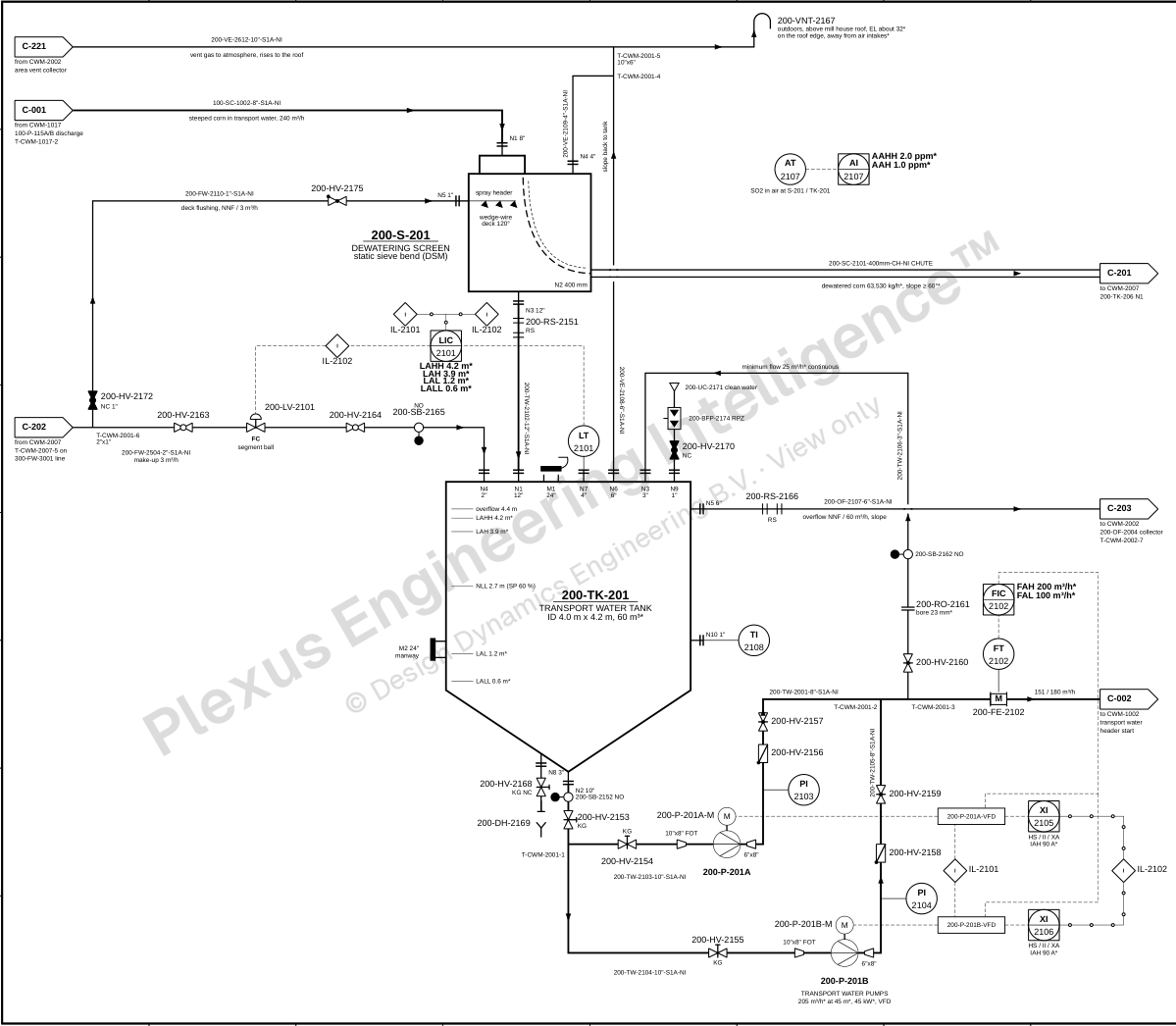
  • P&IDs with item lists
  • Line, valve and equipment lists
  • Instrument index and IO list
  • Control narrative, cause and effect
  • Datasheets
  • HAZID and safety studies
  • Cost estimate

More on request: the list follows your scope.

Each one checked against the others before issue.

Projects delivered
3
Documents issued
81
Engineer-hours saved, estimated*
2,400
  • Pre-FEED package, one section of a first-of-a-kind plant
  • P&ID redraw and pre-HAZOP pack
  • Pilot study package

* Hours a conventional engineering team would need to research and produce the same documents: counted drawing sheets, pages and lists multiplied by effort norms per document type (for example 66 hours for one pre-FEED P&ID sheet). The norms are our own estimate, not time sheets; the range is 1,600 to 3,500 hours. Our own engineering hours (about 14 hours per project) are subtracted; checking, reviews, workshops and meetings are not included. As of 18 November 2026.

Internal studies on hypothetical plants

Example work

Read every document of two complete studies, page by page.

The problem

One value lives
in many documents.

A flow, a line size or a set point is typed into the P&ID, the lists, the datasheets and the estimate. When it changes, someone must find every copy. The copies that are missed are where reviews lose their hours.

  • P&ID95 m³/h
  • Line list93 m³/hMismatch
  • Datasheet82 m³/hOutdated
  • Estimate95 m³/h
Services

Engineering projects, from a
pilot study to full scale.

The scope is shaped around each request. Plexus can be part of the discussion if it fits your team; you can receive the engineering without implementing any software.

  1. 01

    P&ID redraws

    Your P&IDs redrawn to ANSI/ISA-5.1 or to your own company standard, with one symbol set, one tag format and one title block across the set.

  2. 02

    Consistency checks

    We read the P&IDs, lists, process description and safety documents of an ongoing project side by side, and return each finding with its reason. Your engineers decide what to do with it.

  3. 03

    Pre-conceptual to FEED

    Route selection, mass and energy balance, PFDs, P&IDs, lists and the safety studies that belong with them.

What a pilot study takes

One document set,
two ways.

Example: one process section of a first-of-a-kind plant.

Scope

Conventional team

Engineer-hours
1,289 h
Documents
22

With Plexus

Our engineers, per package
15 h
Engineer-hours saved
881 h
Value of the saved hours
EUR 106k

Excludes the fee for Plexus services. The example set of 20 documents was issued for review the day after the inputs arrived.

Conventional hours: estimate for a small Dutch engineering firm without automation, built from counts in the issued documents times a norm per item, with research, internal check, one comment round, approval and project management. Hours saved are the research and production part of those hours (about 70 %), less our own engineering hours; checking, your review, workshops and meetings are not counted as saved. The rate is an assumption you can change.

Method

One knowledge base.
Every document drawn from it.

A change is made once

A change goes into the knowledge base with its reason. Each document that uses the fact is listed for update, before any of them is issued wrong.

Documents are checked against each other

Before issue, drawings, lists and datasheets are compared. A finding names the documents and the facts that disagree, and goes to an engineer.

An engineer decides

Plexus prepares and checks. A named engineer reviews, decides and signs. Values nobody has confirmed stay marked as assumed.

Process
Design basis, BFDs and PFDs, mass balance, P&IDs with lists
Mechanical
Equipment list, datasheets, pressure equipment categories
Piping and layout
Line list, piping classes, valve list, hydraulics, plot plan
Instrumentation and control
Instrument and IO lists, cause and effect, alarms, control narrative
Electrical
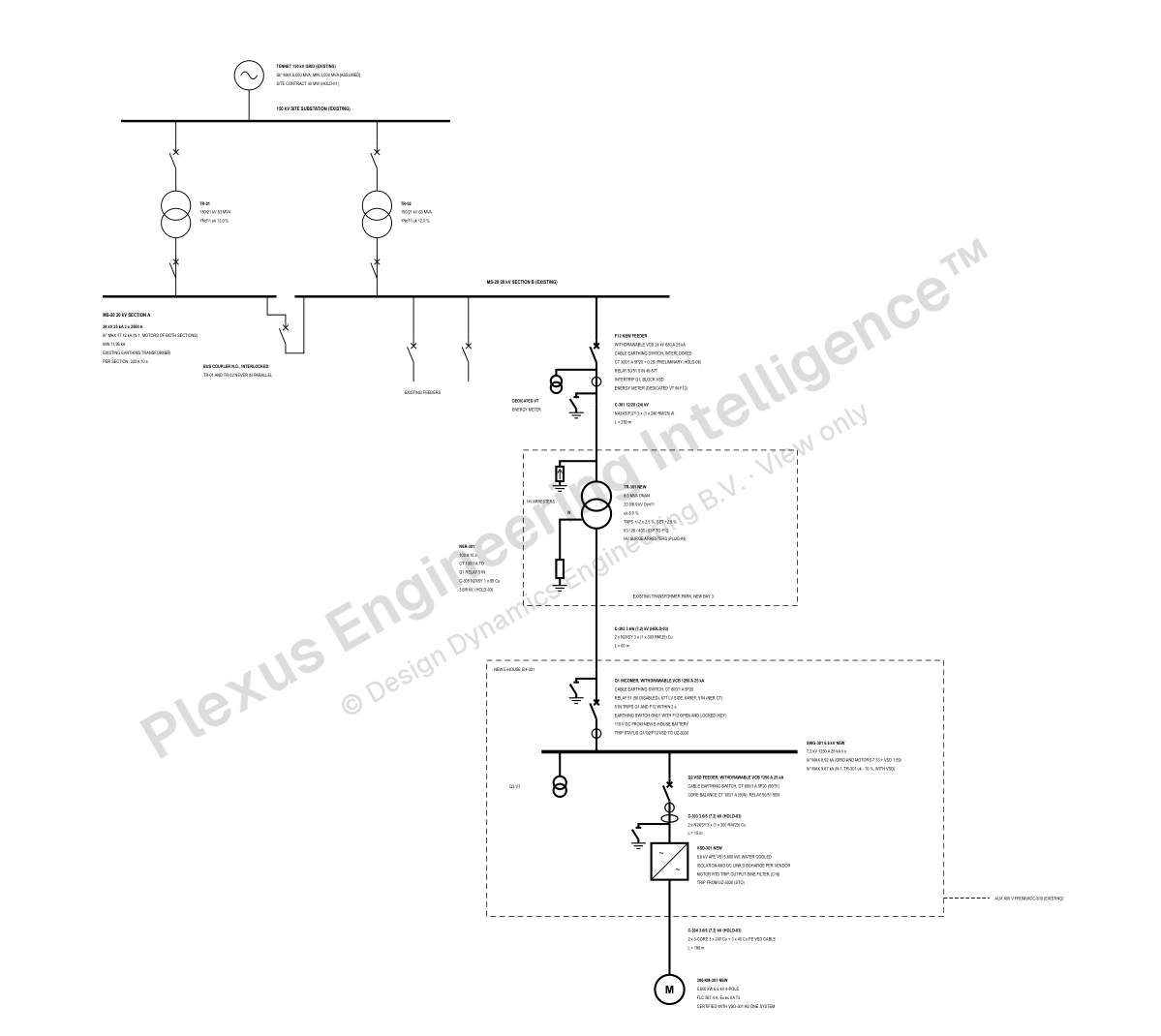
Load list, single line diagram, cable schedule, heat tracing
Safety and permitting
HAZOP support, hazardous areas, relief devices, safety-critical elements
Cost
Capital estimate with its basis of estimate
Project management
Deliverables register, handover dataset, management of change

Plexus as an app. An in-house version is in development for teams that want to run this knowledge base on their own projects.

Trust and engineering authority

Automation that stops at
the engineering decision.

Plexus can extract, compare, flag, draft and recommend. It does not make engineering decisions on its own.

Engineer approval

Extracted values stay marked as candidates until an engineer with review authority approves them.

Source evidence and history

Every proposed value links back to the exact place in its source document. Changes and review decisions are versioned.

Data isolation

Each client's project data is isolated at the database layer with Row Level Security.

EU data residency

European data centers by default. Before a deployment processes project data, we document which providers and models it uses.

Questions engineering teams ask

Clear boundaries build
useful engineering software.

Honest constraints up front. Easier than discovering them three months in.

How do you work with our existing drawings?

We register your P&IDs in Plexus first. Every item, line and instrument on them becomes a fact with its source sheet, and the work starts from there: new drawings, lists and studies are built from those facts. Where a sheet leaves a point unclear, it stays open as a hold for your team.

Is project information used to train models?

No. Plexus does not train models on your project data. The data-processing terms of the providers enabled for a deployment are documented before project information is processed.

Which project sources are supported?

Structured registers and tag lists, P&IDs (PDF or DWG), datasheets, specifications, calculations and vendor documents. Every value waits for engineer review, whatever the format.

Does Plexus replace our existing engineering tools?

No. Your team keeps producing registers, datasheets and drawings in the tools they already use. Plexus works on those outputs and keeps them consistent, reviewed and traceable.

Does Plexus depend on one AI provider?

No. Provider selection is abstracted, so each deployment can choose the AI models it uses without tying the project to one vendor.

Who builds Plexus

Plexus is built by two process engineers, close to 30 years of project work between us. Every workflow in the product is something we have done by hand, revision after revision. We build the software we wished we had on those projects.

Getting started

A pilot study first,
then you decide.

Work starts as a bounded pilot study on your own project, reviewed by your own engineers. Four steps from first call to a decision on the full scope.

  1. Step 1

    Intro call

    A short call on your project. We agree the scope of a pilot study, for example a P&ID redraw or a check of one unit.

  2. Step 2

    Pilot study

    We make the agreed documents. A pilot study can be issued for review within days.

  3. Step 3

    Review with your engineers

    Your engineers review the documents, the flagged findings and the assumed values, and judge them against your sources.

  4. Step 4

    Your decision

    You decide whether to continue with the full scope or stop there. The pilot study documents are yours either way.

It starts with a short call.

Book a call